
Texas Freeze Pipe Burst Insurance Claim: Reasonable Care and Carrier Denials in Houston
When a hard freeze hits Houston and pipes rupture overnight, your Texas freeze pipe burst insurance claim often collapses into a single fight: whether you used “reasonable care” to heat the property. Carriers do not lead with sympathy. They lead with the freeze exclusion, then demand proof you kept heat on, shut water off, or drained the system. This is not a general water-damage tips piece. It is the freeze-exclusion war Texas homeowners face after winter pipe bursts—and how those denials get built.
Nixon Law PLLC tries these files for Houston and Texas property owners. The carrier’s adjuster will treat a burst pipe like a maintenance failure. Your job is to treat it like a coverage fight under the policy you paid for. Call (713) 482-1523 or use our contact page when the denial letter arrives.
Why Winter Pipe Bursts in Houston Become Coverage Wars
Houston freezes are short, sharp, and brutal on plumbing that sits in attics, exterior walls, and unconditioned spaces. When temperatures drop and stay down, water expands, joints fail, and supply lines open. The loss is sudden. The claim is not. Within days the carrier is asking for thermostat settings, utility bills, vacancy history, and photos of space heaters you may or may not have owned.
Most homeowners’ policies cover sudden and accidental discharge of water from plumbing. The freeze exclusion is the carve-out. If the carrier can say you failed to use reasonable care to maintain heat—or to shut off the water supply and drain the system—the exclusion is used to zero the claim. That is the entire game. Everything else is noise.
Property owners who treat this like a routine water claim lose leverage early. Document heat, occupancy, and the timeline of the freeze before the adjuster frames the narrative. For the broader claim path after a denial, see our guide on what to do when a Texas property insurance claim is denied.
The Freeze Exclusion Language Carriers Weaponize
Standard Texas homeowners forms typically exclude loss caused by freezing of a plumbing, heating, air conditioning, or automatic fire protective sprinkler system—or of a household appliance—unless you used reasonable care to maintain heat in the building, or shut off the water supply and drained the systems and appliances of water. That “unless” is the battlefield.
Carriers read the exclusion broadly. They argue any period of low heat, any vacant stretch, any thermostat setback, or any failure to drain equals no coverage. They rarely start from the covered peril of sudden discharge and work forward. They start from the exclusion and work backward until your claim fits the denial box.
Read your declarations and the actual policy form. Endorsements matter. Some forms tighten vacancy rules. Some change who must maintain heat. Do not rely on a call-center summary. The written policy controls, and the freeze exclusion is where Houston winter claims go to die if you let the carrier define “reasonable care” alone.
What Reasonable Care to Heat the Property Actually Means
Reasonable care is not perfection. It is not a guarantee that pipes will never freeze. It is the care a prudent owner would take under the same conditions—with notice of the freeze, the construction of the home, and how the property was being used. Texas juries and courts look at facts, not slogans. Carriers pretend otherwise.
Vacant and Seasonal Homes Face a Higher Bar
If the home was vacant, for sale, under remodel, or used seasonally, the carrier will hammer occupancy. Reasonable care may require shutting off the main and draining lines—not merely leaving the thermostat at 55 and hoping. A vacant Houston bungalow with no heat log and no drain-down proof is the denial the carrier wants. If you left town for a week during a predicted hard freeze, the same scrutiny applies. Distance is not an excuse; it is an argument the adjuster will use.
Continuous Heat Versus Last-Minute Fixes
Continuous, documented heat beats a last-minute space heater story. Utility bills showing steady gas or electric use through the freeze window matter. Smart-thermostat logs, HVAC service records, and neighbor or property-manager statements that the system was running matter. A single photo of a space heater after the burst does not. Reasonable care is measured before the pipe failed, not after you found the ceiling down.
Attic and exterior-wall plumbing in older Houston stock needs more than a living-room thermostat set to “low.” If you knew pipes ran through unconditioned space, the carrier will ask what you did about that risk when the freeze warning hit. Reasonable care can include opening cabinet doors, dripping faucets, insulating known weak runs, and confirming the HVAC actually fired—not assuming it did.
How Carriers Deny Burst Pipe Claims After a Freeze
Denial letters follow a pattern. First, the adjuster cites the freeze exclusion. Second, they claim you failed to maintain heat or drain the system. Third, they treat every gap in your proof as proof of neglect. Fourth, they underpay or zero dwelling and ALE while pointing at “maintenance” or “wear.” The water may have destroyed floors, cabinets, and drywall in hours. The letter will still read like you left the house to freeze on purpose.
Common carrier moves on a Texas freeze pipe burst insurance claim include:
- Demanding thermostat settings you never recorded, then calling the absence of logs a failure of care.
- Using a short vacancy or travel window to reframe an occupied home as abandoned.
- Blaming “old pipes” or “poor insulation” as if age voids sudden discharge coverage.
- Delaying the inspection until demolition or drying muddies the freeze timeline.
- Offering a nuisance payment on contents while denying the structure under the exclusion.
None of that is neutral claims handling. It is exclusion hunting. When the denial tracks bad-faith patterns—outcome-driven investigations, moving goalposts, or refusal to consider heat evidence—you are past a simple coverage question. See how Texas law treats bad faith insurance practices against policyholders.
Evidence That Proves You Met the Reasonable Care Standard
Win the reasonable-care fight with contemporaneous proof, not reconstruction after the denial. Pull gas and electric bills for the freeze month and the months before. Export smart-thermostat history. Save freeze warnings you received and any steps you took the day before temperatures dropped. Photograph the boiler, furnace, or HVAC display if it still shows settings. Get statements from anyone who checked the house.
If you shut the water off and drained the system, document that sequence: valve position, open faucets, blower-out if done, and who performed the work. If a plumber winterized the property, produce the invoice and scope. Carriers ignore undocumented winterization. They cannot easily ignore a dated invoice and a tech’s notes.
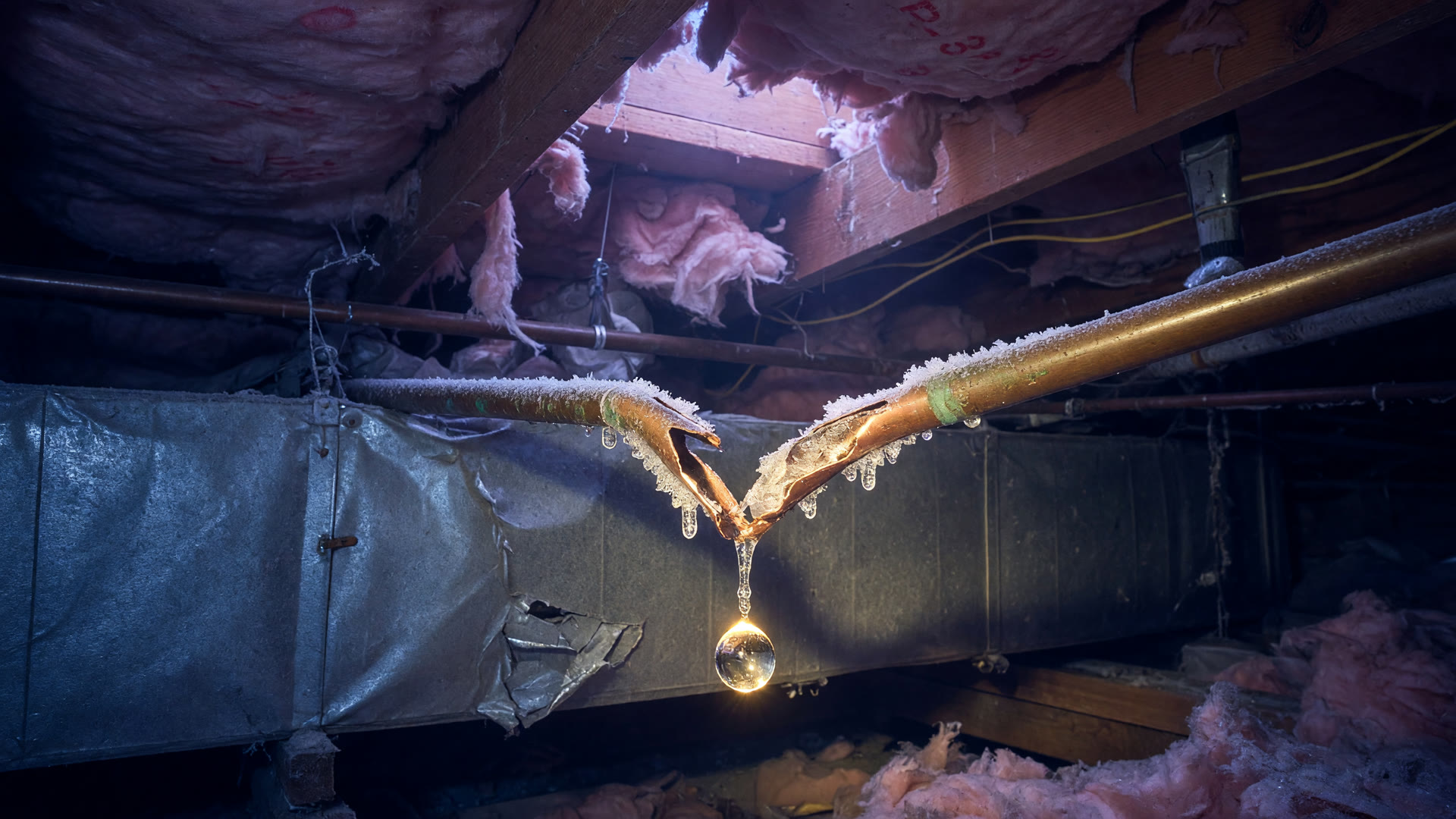
Preserve the failed pipe section when safe to do so. A freeze burst has characteristic fracture patterns. Do not let the mitigation crew trash the only physical evidence while the carrier is still “investigating.” Pair that with a clear timeline: last occupancy, last confirmed heat, first discovery of water, and first notice to the carrier. Gaps are where denials live.
For the full property-insurance practice approach we take on disputed first-party losses, review Nixon Law’s property insurance practice. Freeze exclusions are won on facts and policy language, not on hope the adjuster softens.
Chapter 541, Prompt Payment, and When to Escalate
Texas Insurance Code Chapter 541 prohibits unfair settlement practices, including misrepresenting coverage and failing to attempt a good-faith settlement when liability has become reasonably clear. The statute is public: statutes.capitol.texas.gov/Docs/IN/htm/IN.541.htm. A freeze denial that ignores heat bills, thermostat logs, and winterization proof is not “good faith disagreement.” It is a coverage decision built to save the carrier money.
Prompt-payment deadlines still matter while the freeze fight runs. Delay dressed up as endless “investigation” into whether you heated the house can support additional pressure under the Code. Track every request, every response, and every day the carrier sits on a completed proof of loss. For deadline mechanics, see our breakdown of Texas Insurance Code prompt payment deadlines.
Do not give a recorded statement that accepts the carrier’s framing—“So you left the heat off?” is not a neutral question. Correct the record in writing. Demand the specific policy language relied upon. Demand the factual basis for “no reasonable care.” If the answer is speculation about attic temperature, you are looking at a trial issue, not a closed file.
Trial Posture on a Denied Houston Freeze Claim
These cases turn on credibility and documentation. A jury can understand a Houston freeze warning, a thermostat set to heat, utility usage through the cold window, and a pipe that failed anyway. A jury can also understand a carrier that never seriously weighed that proof. Your leverage is the file you build before suit: heat evidence, exclusion language, denial letter, and the carrier’s refusal to move.
Appraisal may address price. It does not reliably fix a pure freeze-exclusion coverage denial. If the carrier says the loss is excluded, you are in a coverage fight. That is lawyer work. Public adjusters and contractors cannot try the exclusion. If the dwelling is open, mold is growing, and ALE is stalled, waiting for another “review” is how owners fund the carrier’s delay.
Nixon Law PLLC takes freeze pipe-burst denials for trial when the facts support coverage and the carrier hides behind “reasonable care” without proof. Houston winters will keep testing plumbing. They should not test whether your policy was real.
This article is for general informational purposes about Texas law and is not legal advice. Reading it does not create an attorney-client relationship. Deadlines and outcomes depend on the facts of each matter. Contact Nixon Law PLLC to discuss your situation.
Frequently Asked Questions
Does leaving the thermostat at 55 degrees satisfy reasonable care in a Texas freeze?
Not automatically. Reasonable care depends on the home’s construction, pipe locations, occupancy, and the severity of the freeze warning. A set point helps, but carriers still attack vacant homes, known attic runs, and periods with no proof the HVAC actually ran. Utility logs and thermostat history matter more than a number you claim after the loss.
If I was out of town during the Houston freeze, is my pipe burst claim dead?
Travel alone does not void coverage, but it raises the carrier’s vacancy and heat arguments. You need proof of what heat or drain-down steps were in place before temperatures dropped—manager checks, smart-thermostat control, winterization, or shutoff. Silence about the trip and no heat proof is what kills the claim, not the airplane ticket.
Can the insurer deny a freeze burst solely because the pipes were old?
Age and insulation quality are favorite distractions. Sudden freeze failure is still often a covered discharge unless the freeze exclusion applies through a failure of reasonable care. Carriers blend “old pipes” language into exclusion denials to sound technical. Make them separate wear-and-tear from the freeze exclusion and put both on the record.
Should I give a recorded statement about heating the house before I hire counsel?
Be careful. Adjusters draft questions to lock you into “we left the heat low” or “no one checked the house.” Short written answers backed by bills and logs are safer than a long recorded narrative. Once the freeze exclusion is in play, treat the statement as evidence in a coverage lawsuit, not a friendly chat.
This does not represent direct legal advice; should you have any questions or concerns in this particular area, you are encouraged to contact a licensed attorney in the state of Texas to seek legal representation and get answers to your questions.
Have a related legal question? Contact Nixon Law PLLC.